
The Herald
May 23, 2004
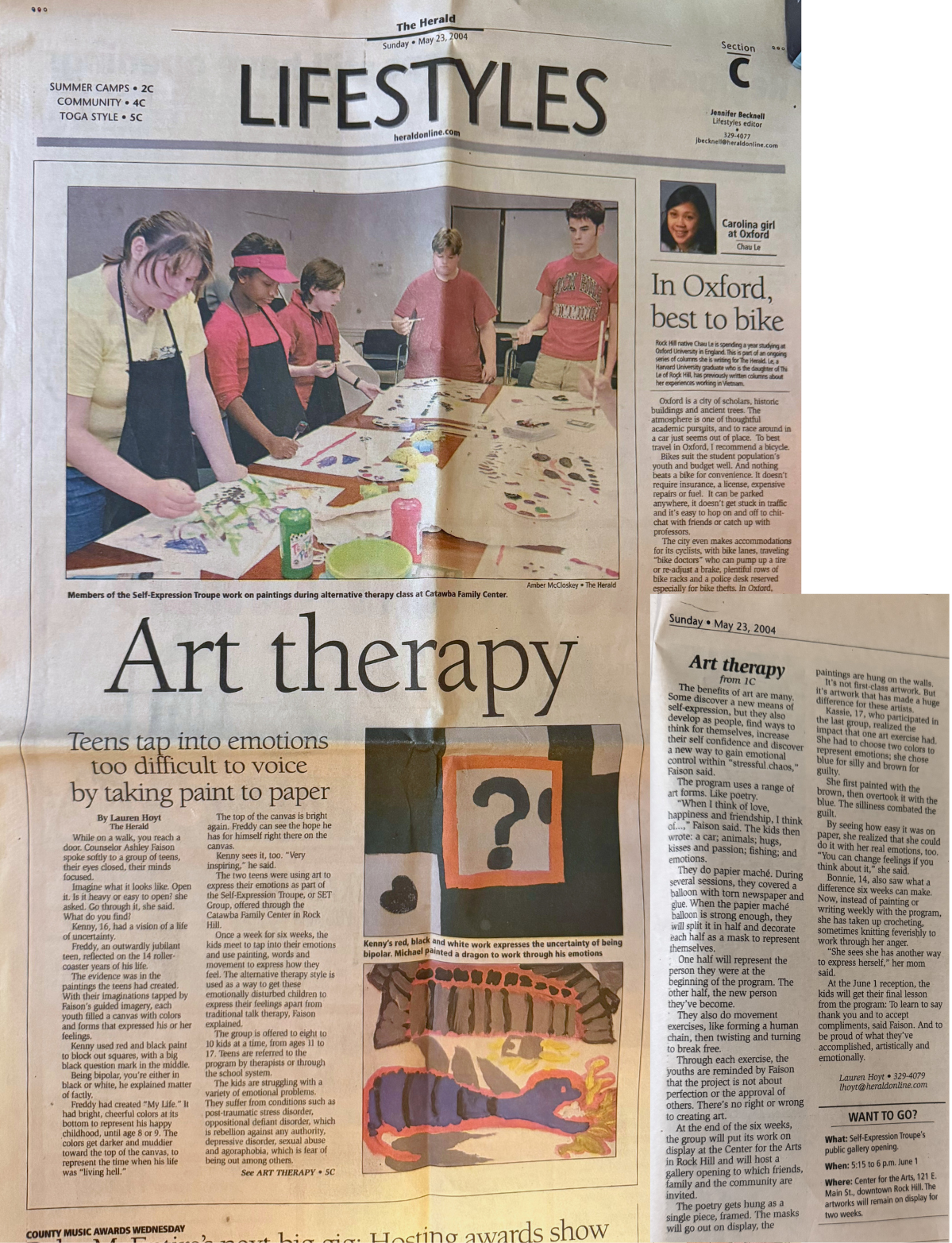
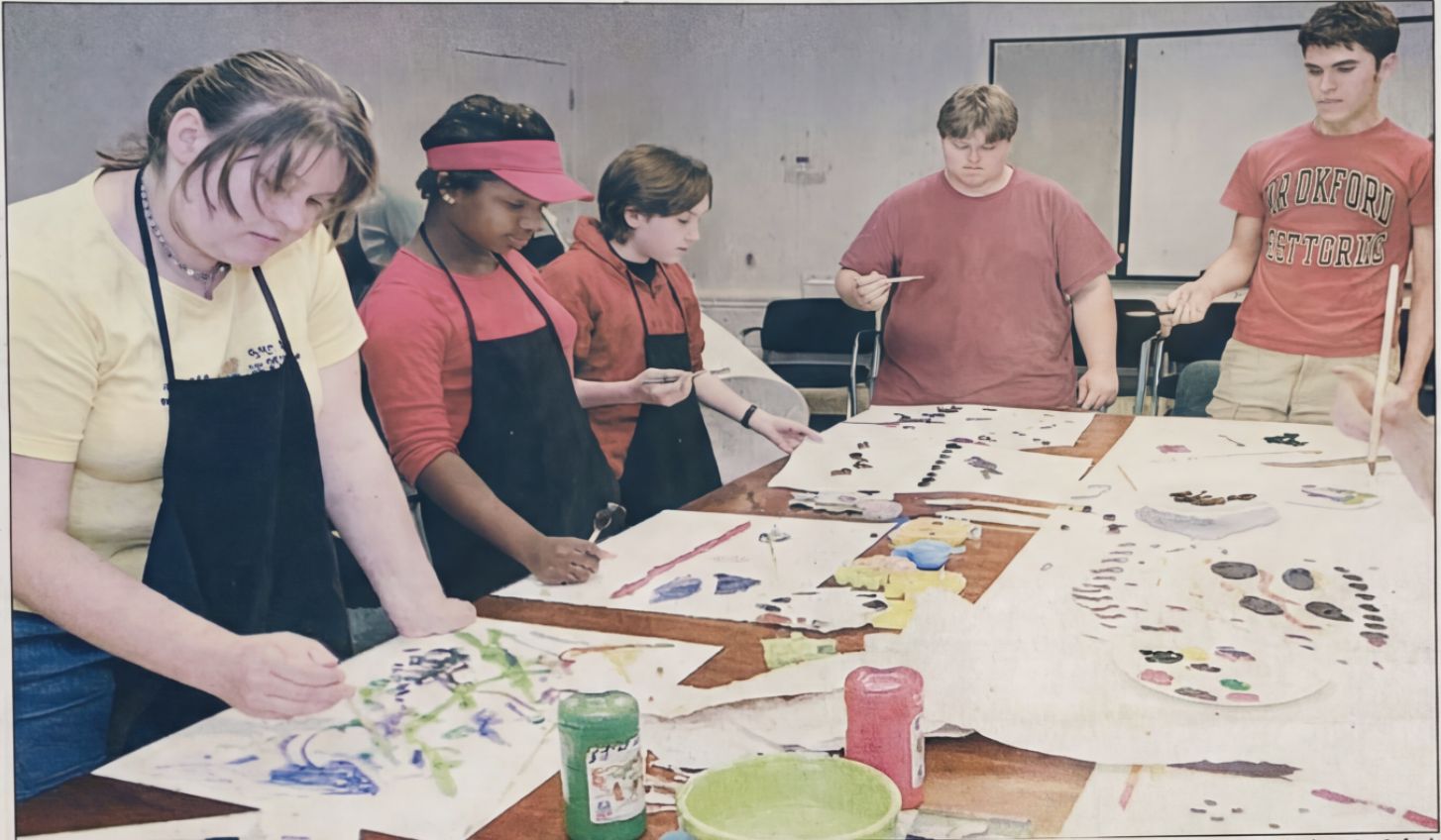
Members of the Self-Expression Troupe work on paintings during alternative therapy class at Catawba Family Center.* Photo: Amber McCloskey / The Herald Art therapy
Teens tap into emotions too difficult to voice by taking paint to paper
By Lauren Hoyt
While on a walk, you reach a door. Counselor Ashley Faison spoke softly to a group of teens, their eyes closed, their minds focused.
Imagine what it looks like. Open it. Is it heavy or easy to open? she asked. Go through it, she said. What do you find?
Kenny, 16, had a vision of a life of uncertainty.
Freddy, an outwardly jubilant teen, reflected on the 14 roller-coaster years of his life.
The evidence was in the paintings the teens had created. With their imaginations tapped by Faison’s guided imagery, each youth filled a canvas with colors and forms that expressed his or her feelings.
Kenny used red and black paint to block out squares, with a big black question mark in the middle.
Being bipolar, you’re either in black or white, he explained matter-of-factly.
Freddy had created “My Life.” It had bright, cheerful colors at its bottom to represent his happy childhood, until age 8 or 9. The colors got darker and muddier toward the top of the canvas, to represent the time when his life was “living hell.”
The top of the canvas is bright again. Freddy can see the hope he has for himself right there on the canvas.
Kenny sees it, too. “Very inspiring,” he said.
The two teens were using art to express their emotions as part of the Self-Expression Troupe, or SET Group, offered through the Catawba Family Center in Rock Hill.
Once a week for six weeks, the kids meet to tap into their emotions and use painting, words and movement to express how they feel. The alternative therapy style is used as a way to get these children to express their feelings apart from traditional talk therapy, Faison explained.
The group is offered to eight to 10 kids at a time, from ages 11 to 17. Teens are referred to the program by therapists or through the school system.
The kids are struggling with a variety of emotional problems. They suffer from conditions such as post-traumatic stress disorder, oppositional defiant disorder, which is rebellion against any authority, depressive disorder, sexual abuse and agoraphobia, which is fear of being out among others.
The benefits of art are many. Some discover a new means of self-expression, but they also develop as people, find ways to think for themselves, increase their self confidence and discover a new way to gain emotional control within “stressful chaos,” Faison said.
The program uses a range of art forms. Like poetry.
“When I think of love, happiness and friendship, I think of…,” Faison said. The kids then wrote: a car; animals; hugs, kisses and passion; fishing; and emotions.
They do papier maché. During several sessions, they covered a balloon with torn newspaper and glue. When the papier maché balloon is strong enough, they will split it in half and decorate each half as a mask to represent themselves.
One half will represent the person they were at the beginning of the program. The other half, the new person they’ve become.
They also do movement exercises, like forming a human chain, then twisting and turning to break free.
Through each exercise, the youths are reminded by Faison that the project is not about perfection or the approval of others. There’s no right or wrong to creating art.
At the end of the six weeks, the group will put its work on display at the Center for the Arts in Rock Hill and will host a gallery opening to which friends, family and the community are invited.
The poetry gets hung as a single piece, framed. The masks will go out on display, the paintings are hung on the walls.
It’s not first-class artwork. But it’s artwork that has made a huge difference for these artists.
Kasie, 17, who participated in the last group, realized the impact that one art exercise had. She had to choose two colors to represent emotions; she chose blue for silly and brown for guilty.
She first painted with the brown, then overtook it with the blue. The silliness combated the guilt.
By seeing how easy it was on paper, she realized that she could do it with her real emotions, too.
“You can change feelings if you think about it,” she said.
Connie, 14, also saw what a difference six weeks can make. Now, instead of painting or writing weekly with the program, she has taken up crocheting, sometimes knitting feverishly to work through her anger.
“She sees she has another way to express herself,” her mom said.
At the June 1 reception, the kids will get their final lesson from the program: To learn to say thank you and to accept compliments, said Faison. And to be proud of what they’ve accomplished, artistically and emotionally.
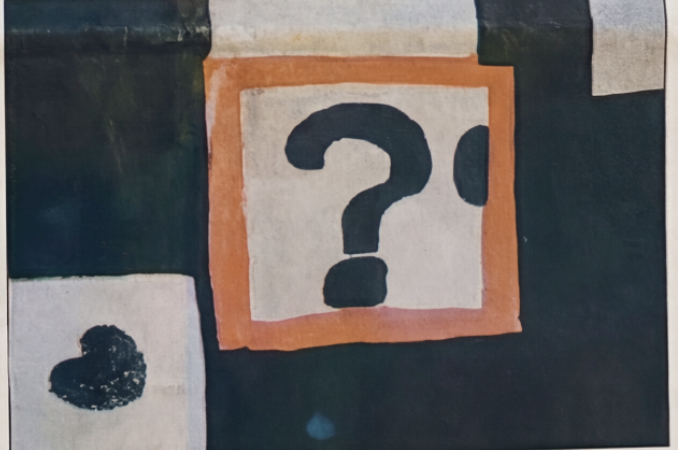
Kenny’s red, black and white work expresses the uncertainty of being bipolar.
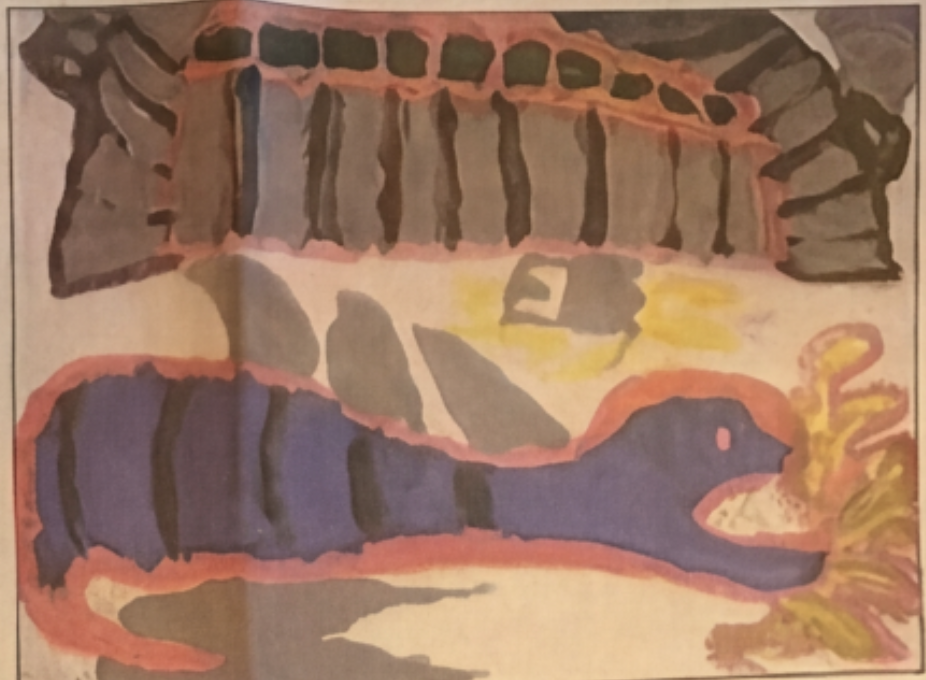
[Michael painted a dragon to work through his emotions.